
THE M.G.B.M. (MICROBIOTA–GUT–BRAIN–MIND) AXIS: AN INTEGRATED BIO-PSYCHO-SOCIAL HOLOBIONT MODEL IN REGULATING CANCER RESPONSE
Agnoletti, M. (2026). The M.G.B.M. (microbiota–gut–brain–mind) axis: an integrated bio-psycho-social holobiont model in regulating cancer response. Artoi & SIO International Conference, Rome.
Abstract
Contemporary oncology increasingly recognizes the role of systemic factors in modulating tumor progression and therapeutic response. However, these factors are often analyzed in a fragmented manner. The bio-psycho-social holobiont model (a set of human and extrahuman cells that interact symbiotically to form an integrated biological unit) and the specific M.G.B.M. (Microbiota–Gut–Brain–Mind) axis are proposed here as integrated theoretical frameworks capable of overcoming this reductionism.
The aim of this paper is to propose an integrated model of the bio-psycho-social holobiont in which the microbiota, gut, immune, neurological, and psychological systems form a self-regulating dynamic system relevant to understanding the oncological process.
Methods
Interdisciplinary theoretical analysis based on evidence from psychoneuroendocrinoimmunology (PNEI), integrative oncology, microbiota research and information medicine.
Results
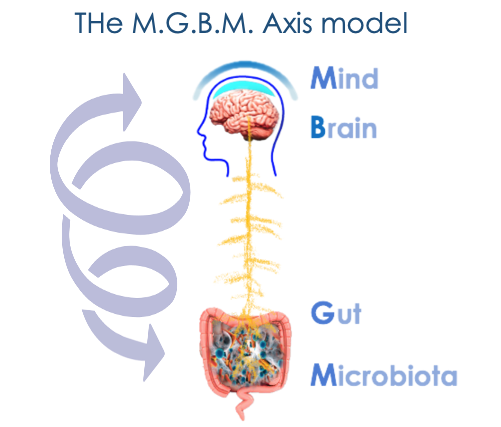
In the context of the bio-psycho-social holobiont model, the M.G.B.M. axis emerges as a bidirectional system in which:
• the microbiota modulates immunity, neurobiological processes, and psychological processes.
• the gut represents a key interface between human cells and nonhuman molecules for understanding metabolic dynamics and inflammatory/tumor processes.
• the nervous system, particularly the vagus nerve, and the brain strategically mediate systemic immune communications.
• the mind, understood as a set of cognitive, emotional, and motivational processes that actively regulate the teleonomy of the entire holobiont.
The model introduces the concept of a "psycho-biological set-point," where chronic factors (stress, dysbiosis, inflammation, etc.) can alter the dynamic balance of the M.G.B.M. axis, generating a state of oncological vulnerability.
Oncological disease can be interpreted as a multilevel informational dysregulation of this system.
Conclusions
The integrated bio-psycho-social holobiont model represented by the M.G.B.M. axis allows us to interpret cancer as a systemic, multilevel informational dysregulation. This perspective supports the value of integrating biological, psychological, and social interventions into clinical practice, suggesting new hypotheses for translational research.
Keywords
Microbiota–Gut–Brain Axis; MGB Axis; Integrative Oncology; Psychoneuroendocrinoimmunology; Holobiont; Bio-psycho-social Model; Psycho-biological Set-point; Immune Modulation; Inflammation and Cancer; Mind–Body Interaction.
References
Agnoletti, M. (2023). Perché si dovrebbe parlare di asse microbiota-intestino-cervello-mente. Medicalive Magazine, 6, 12-16.
Agnoletti, M. (2021). L’epigenetica e l’olobionte umano-microbiota. Medicalive Magazine, 5, 19-26.
Agnoletti, M., & Fasano, A. (2025). The microbiota’s funnel effect: How multiple factors independently converge in changing the microbiota. PNEI Review, PRE, 1–10. https://doi.org/10.3280/pnei2025oa19441
Bottaccioli, F., & Bottaccioli, A. G. (2020). Psyco Neuro Endocrine Immunology and the science of the integrated care - The manual. Edra.
Engel G. L. (1977). The need for a new medical model: a challenge for biomedicine. Science (New York, N.Y.), 196(4286), 129–136. https://doi.org/10.1126/science.847460
Cryan, J. F., O'Riordan, K. J., Cowan, C. S. M., Sandhu, K. V., Bastiaanssen, T. F. S., Boehme, M., Codagnone, M. G., Cussotto, S., Fulling, C., Golubeva, A. V., Guzzetta, K. E., Jaggar, M., Long-Smith, C. M., Lyte, J. M., Martin, J. A., Molinero-Perez, A., Moloney, G., Morelli, E., Morillas, E., O'Connor, R., … Dinan, T. G. (2019). The Microbiota-Gut-Brain Axis. Physiological reviews, 99(4), 1877–2013. https://doi.org/10.1152/physrev.00018.2018
Laszlo, E., & Biava, P. M. (2019). Information medicine: The revolutionary cell-reprogramming discovery that reverses cancer and degenerative diseases. Healing Arts Press.
McEwen B. S. (2007). Physiology and neurobiology of stress and adaptation: central role of the brain. Physiological reviews, 87(3), 873–904. https://doi.org/10.1152/physrev.00041.2006
 Mi chiamo Massimo Agnoletti, sono uno psicologo, un dottore di ricerca e uno specialista dello stress. Ho un'esperienza professionale internazionale, soprattutto negli USA, e da sempre ho la passione di studiare la psicologia scientifica per tradurla in modalità concrete ed applicabili al fine di migliorare il benessere delle persone.